If you have back pain, neck pain, headaches, or a sports injury, you may be wondering whether you should see a physiotherapist or a chiropractor.
Both professions work with people experiencing musculoskeletal pain and movement problems. However, their approaches, treatment methods, and emphasis can differ depending on the practitioner, your condition, and your goals.
Choosing the right practitioner is not simply about who can relieve your pain today. It is also about understanding your problem, restoring your ability to move, and developing a plan that helps you maintain your progress over time.
At Narrow Gate Physiotherapy in Belmore, NSW, we believe good care should do more than provide temporary relief. It should help you understand your body, improve your physical capacity, and return to the activities that matter to you.
Let’s explore the differences between physiotherapy and chiropractic care, what each may offer, and how to decide which is right for you.
1. What Is Physiotherapy?
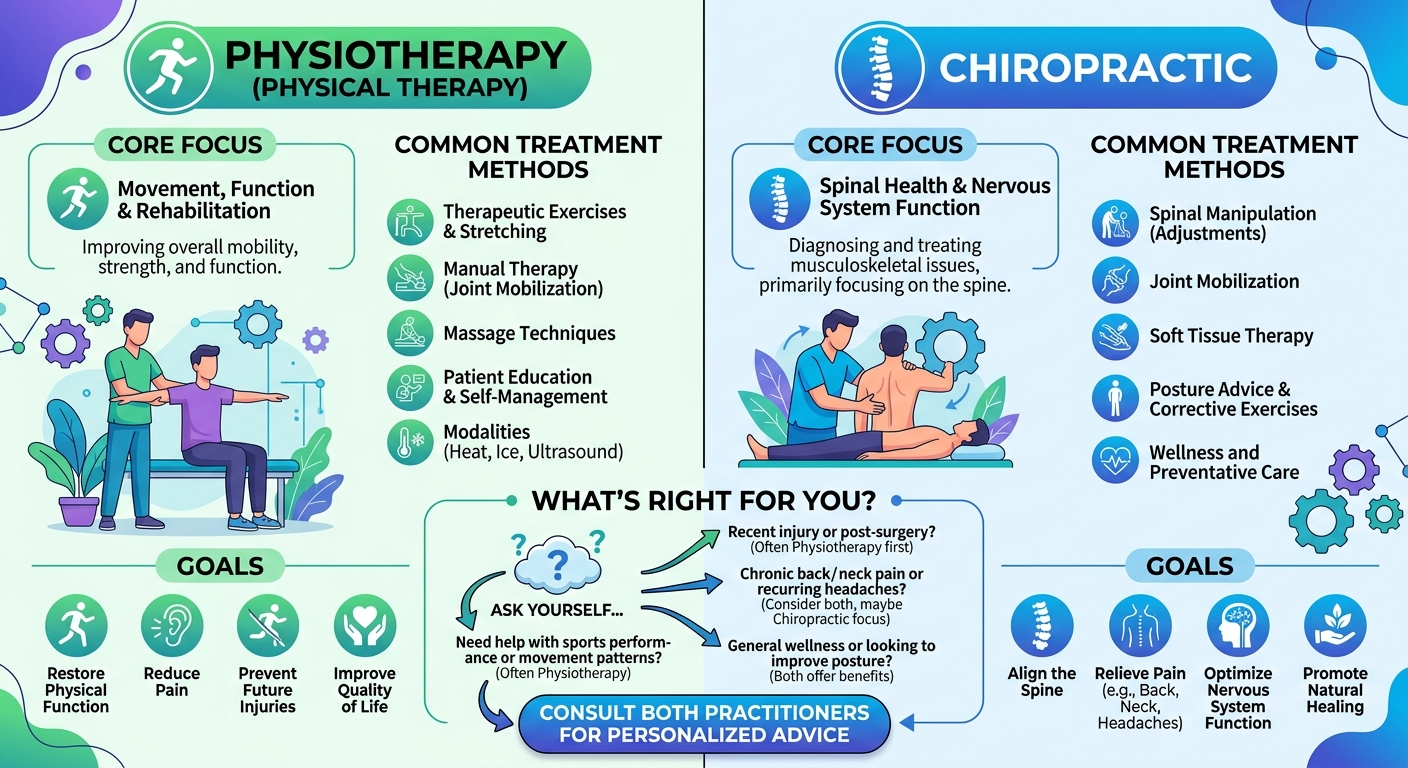
Physiotherapy is a healthcare profession focused on assessing, treating, and helping prevent problems involving movement, physical function, pain, and rehabilitation.
Physiotherapists assess how your body moves, how much physical activity you can tolerate, and what factors may be contributing to your symptoms. They then develop an individualised management plan based on your presentation and goals.
Depending on your condition, physiotherapy may include:
- Exercise-based rehabilitation: Building strength, mobility, balance, coordination, and physical capacity.
- Manual therapy: Hands-on techniques that may help manage pain or improve movement.
- Education: Helping you understand your symptoms, recovery expectations, and self-management options.
- Load management: Adjusting the amount and intensity of work, exercise, or sport your body is currently handling.
- Functional rehabilitation: Preparing you for the specific demands of work, daily life, or sport.
- Injury prevention and recurrence management: Identifying relevant risk factors and developing strategies to reduce the likelihood or impact of future flare-ups.
For example, someone with recurring lower back pain may benefit from understanding their symptom triggers, gradually improving strength and activity tolerance, and learning how to manage lifting demands at work.
A runner with Achilles tendinopathy may need a structured strengthening programme and a gradual return to running.
The treatment depends on the individual rather than a standard routine applied to everyone.
2. What Is Chiropractic Care?
Chiropractic is a healthcare profession that commonly focuses on the assessment and management of musculoskeletal conditions, particularly those involving the spine.
Chiropractors may use a range of approaches, including:
- Spinal manipulation: A hands-on technique involving a controlled force applied to a spinal joint.
- Joint mobilisation: Gentle movements applied to a joint to address pain or restricted movement.
- Soft-tissue techniques: Hands-on approaches targeting muscles and other soft tissues.
- Exercise and rehabilitation: Depending on the practitioner’s approach and your condition.
- Advice and education: Guidance on activity, posture, and managing symptoms.
Spinal manipulation sometimes produces a clicking or popping sound. This sound is generally associated with changes in pressure within a joint; it does not mean that a bone has been put back into place.
Chiropractic care varies between practitioners. Some place considerable emphasis on manual treatment, while others also incorporate exercise, education, and broader rehabilitation strategies.
The most important consideration is what the practitioner actually does, whether the treatment is appropriate for your condition, and whether your progress is being monitored.
3. Physiotherapy vs Chiropractic: The Main Differences
Although there is overlap between the two professions, the emphasis of care can differ.
| Area | Physiotherapy | Chiropractic |
|---|---|---|
| Main focus | Movement, physical function, rehabilitation, and pain management | Commonly musculoskeletal conditions, particularly spinal and joint-related symptoms |
| Common treatment methods | Exercise, education, load management, manual therapy, and functional rehabilitation | Spinal manipulation, mobilisation, soft-tissue techniques, exercise, and education |
| Exercise rehabilitation | Often a central part of treatment, depending on the condition | May be included, depending on the practitioner and treatment plan |
| Return to work or sport | Often involves graded, task-specific rehabilitation | May involve rehabilitation and activity advice, depending on the practitioner |
| Hands-on treatment | May be used alongside exercise and education | Spinal or joint manipulation may be a prominent component |
| Long-term management | Often emphasises self-management, physical capacity, and maintaining progress | Approaches vary; some also emphasise exercise and independent self-management |
These are general differences, not rigid rules. Physiotherapists may use spinal manipulation, and chiropractors may prescribe exercise. There is also variation within each profession.
Rather than choosing based on a professional title alone, ask what your assessment and treatment plan will involve.
4. Which Is Better for Back Pain?
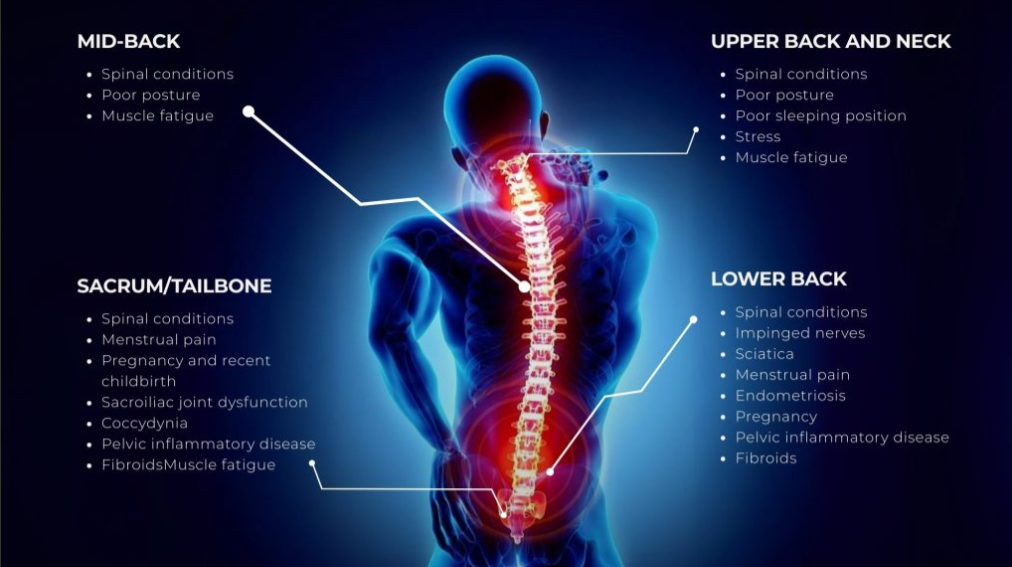
Back pain is one of the most common reasons people seek musculoskeletal care.
Both physiotherapy and chiropractic care may help some people with uncomplicated back pain. The most suitable approach depends on your symptoms, medical history, preferences, and treatment goals.
For many people, a useful management plan includes appropriate reassurance, staying active, gradual exercise, and strategies for managing physical demands.
Physiotherapy may be particularly suitable if you want a structured plan that includes:
- Understanding your pain and identifying relevant contributing factors.
- Improving strength and movement confidence.
- Building tolerance for sitting, standing, lifting, or exercise.
- Managing recurring flare-ups.
- Returning to work, sport, or other demanding activities.
Chiropractic care may appeal to people who prefer hands-on treatment or want to explore spinal manipulation as one component of their care.
However, no single technique is necessary or effective for everyone. Manual therapy, including spinal manipulation, is generally best considered as one possible part of a broader management plan rather than a guaranteed solution.
The key question is not simply which profession treats back pain. It is which approach is appropriate for your particular symptoms and helps you make meaningful, lasting progress.
5. What About Neck Pain and Headaches?
Neck pain can develop for many reasons, including prolonged positions, changes in activity, muscle sensitivity, injury, and other medical conditions.
Physiotherapy may involve neck and upper-back exercises, movement retraining, activity modification, education, and selected manual techniques.
Chiropractors may also use mobilisation or spinal manipulation to manage some musculoskeletal neck complaints.
For certain types of headache, such as some headaches associated with neck pain, exercise and manual therapy may help. However, not every headache originates from the neck, and a new or unusual headache should not automatically be treated as a musculoskeletal problem.
Seek urgent medical assessment for a sudden, extremely severe headache, or a headache accompanied by symptoms such as new weakness, confusion, fainting, fever with neck stiffness, or other significant neurological changes.
For neck manipulation specifically, it is important to discuss potential benefits, risks, and alternatives with a suitably qualified practitioner. Rare but serious complications have been reported following cervical manipulation, and the relationship between manipulation and some complications is complex. Gentle techniques, exercise-based care, or other options may be preferable depending on your circumstances.
The priority should always be an appropriate assessment and a treatment choice that reflects your individual risk factors.
6. Which Is Better for Sports Injuries?
If your goal is to return to running, lifting weights, playing basketball, or participating in another sport, rehabilitation needs to reflect the demands of that activity.
Pain relief is only one part of recovery.
For example, a basketball player recovering from an ankle sprain may need to restore:
- Ankle mobility and strength.
- Balance and coordination.
- Landing mechanics.
- Jumping and change-of-direction ability.
- Confidence under game-like conditions.
Similarly, a runner with a tendon injury may need a progressive loading programme and a structured return-to-running plan.
Physiotherapy commonly uses exercise-based rehabilitation to address these physical demands and measure progress towards specific goals. Some chiropractors also provide sports rehabilitation, so it is worth asking about their experience and treatment approach.
If you are returning to a physically demanding job, the same principle applies. Your rehabilitation should prepare you for the lifting, carrying, standing, walking, or repetitive tasks you need to perform safely.
7. Why Pain Relief Is Not Always the Same as Recovery
One of the biggest mistakes people can make is assuming that less pain automatically means the underlying problem has been fully addressed.
Imagine that your back pain improves after a hands-on treatment. You feel more comfortable and return to lifting heavy objects at work. However, your capacity to tolerate those demands has not changed sufficiently.
Your symptoms may return when the workload increases.
This does not mean the hands-on treatment was useless. It may have helped manage your symptoms. The issue is that pain relief and physical recovery are not always the same thing.
A more complete approach may involve:
- Understanding the nature of your symptoms.
- Finding appropriate ways to manage pain and maintain activity.
- Gradually rebuilding the strength and capacity relevant to your daily demands.
- Monitoring your response and adjusting your workload.
- Developing strategies to manage future flare-ups.
This principle applies regardless of whether you see a physiotherapist, chiropractor, or another appropriately qualified healthcare professional.
The aim should be to help you become more capable and confident, not simply to depend on repeated treatment whenever symptoms return.
8. How Many Sessions Will You Need?
There is no universal number of appointments for either physiotherapy or chiropractic care.
The number of sessions depends on factors such as:
- The nature and severity of your condition.
- How long the problem has been present.
- Your starting strength and physical capacity.
- Your work, sporting, and daily activity demands.
- Other health factors that may influence recovery.
- How consistently you can follow the recommended management plan.
- How your symptoms and function respond over time.
A recent, uncomplicated episode of back pain may require a different approach from a long-standing problem that affects work and exercise.
A good practitioner should explain the purpose of treatment, how progress will be assessed, and when the plan needs to change.
At Narrow Gate Physiotherapy, we aim to make each appointment purposeful. We want you to understand what you are working towards, what you can do between sessions, and how progress will be measured.
The objective is not to keep you attending indefinitely. It is to provide the appropriate care for your needs and help you develop the skills and capacity to manage your condition as independently as possible.
9. How to Choose the Right Practitioner for You
Before booking an appointment, consider these questions.
Do they assess before treating?
A proper assessment should explore your history, symptoms, relevant medical factors, and physical function.
Be cautious about approaches that promise to identify the cause of every problem through a single test or technique.
Will they explain your condition clearly?
You should have an opportunity to understand the likely causes of your symptoms, the uncertainty that may remain, and the reasoning behind the proposed treatment.
You should also feel comfortable asking questions.
Is the treatment plan individualised?
Your plan should reflect your goals, physical capacity, preferences, and medical circumstances.
A desk worker, a competitive athlete, and a tradesperson may have very different rehabilitation needs, even if all three experience lower back pain.
Does the plan include self-management?
Ask what you can do outside appointments to support recovery.
This may involve exercise, activity modification, gradual loading, movement breaks, or other practical strategies.
Is progress reviewed?
Your practitioner should monitor whether treatment is helping you achieve meaningful improvements in pain, movement, and function.
If progress is limited, they should be willing to reassess the situation and consider alternative approaches or medical referral when appropriate.
Do they recognise when you need another type of care?
Not every problem is musculoskeletal, and not every symptom should be managed through routine manual therapy or exercise.
A responsible practitioner should recognise warning signs and recommend medical assessment when needed.
10. Why Narrow Gate Physiotherapy Emphasises Individualised Rehabilitation
At Narrow Gate Physiotherapy in Belmore, NSW, we believe effective care starts with understanding your circumstances rather than simply treating the area that hurts.
Our approach combines thorough assessment, clear communication, appropriate hands-on treatment when indicated, and progressive rehabilitation tailored to your goals.
We consider the demands your body needs to handle, whether that involves sitting through a working day, lifting at work, returning to sport, or maintaining an active lifestyle.
Our approach includes:
Assessment: We explore your symptoms, medical history, movement, and physical capacity to develop a working understanding of your presentation.
Education: We help you understand your condition and the reasoning behind your management plan.
Load management: We identify relevant activity demands and help you find a manageable balance between doing too much and avoiding movement unnecessarily.
Progressive rehabilitation: We build towards the strength, mobility, endurance, and confidence needed for your daily activities.
Reassessment: We review your response and adjust the plan as your symptoms and capacity change.
We also recognise that recovery requires collaboration. Your goals, circumstances, and willingness to participate in the process all matter. We aim to meet you where you are while helping you move towards meaningful long-term outcomes.
Our philosophy is simple: Get you better. Keep you better. Help you stay better.
Frequently Asked Questions
Is physiotherapy better than chiropractic?
Neither profession is automatically better for every person or condition. Both may help with selected musculoskeletal problems. The appropriate choice depends on your presentation, treatment preferences, the practitioner’s expertise, and whether the proposed plan addresses your goals.
Can a physiotherapist crack my back?
Some physiotherapists are trained to perform spinal manipulation, which can sometimes produce a clicking or popping sound. However, physiotherapy does not require spinal cracking. Treatment may instead focus on exercise, education, mobilisation, or other appropriate techniques.
Do chiropractors only crack backs?
No. Chiropractic care varies between practitioners and may include manipulation, mobilisation, soft-tissue treatment, exercise, and education.
Should I see a physiotherapist or chiropractor for sciatica?
Sciatica can have different causes and presentations. A physiotherapist may help assess your movement, function, and neurological symptoms and develop a suitable rehabilitation plan. A chiropractor may also assess some musculoskeletal presentations. Significant or progressive weakness, new bladder or bowel problems, or saddle numbness requires urgent medical assessment rather than routine treatment.
Can I see a physiotherapist without a doctor’s referral?
In many circumstances in Australia, you can book directly with a physiotherapist without a doctor’s referral. However, referral requirements can differ for certain funding arrangements, insurance claims, and specific services.
Which treatment provides longer-lasting results?
Long-term outcomes depend on the condition, the treatment provided, your response, and other individual factors. Exercise, education, appropriate activity, and self-management can play important roles in many musculoskeletal conditions. No practitioner can guarantee a permanent result.
Conclusion: Choose the Approach That Matches Your Goals
Physiotherapy and chiropractic care have overlapping roles in managing musculoskeletal pain, but their approaches and individual practitioners can differ.
If you want to improve movement, build physical capacity, return to work or sport, and learn how to manage your symptoms, physiotherapy may be a suitable option. If you prefer hands-on spinal treatment, chiropractic care may also be worth discussing, provided it is appropriate for your condition and risks.
Ultimately, choose a practitioner who assesses you carefully, explains the treatment options, respects your preferences, monitors your progress, and recognises when medical care is needed.
You can make a booking online or call us on 0478 260 200. For a limited time, we have free discovery sessions where you get assessed by our physiotherapists and given an outline of how we can help you to have full confidence in working with us. We also offer promotions that include discounted initial sessions to incentivise getting started with your rehabilitation journey.