Shoulder pain can make everyday activities surprisingly difficult. Reaching overhead, lifting weights, carrying shopping bags, getting dressed, or even sleeping on your side can become uncomfortable.
For some people, the pain starts after a specific injury. For others, it develops gradually after months of desk work, gym training, repetitive lifting, or everyday activities.
The challenge is that different shoulder conditions can produce similar symptoms. Pain when lifting your arm, for example, does not automatically mean you have a rotator cuff injury. Likewise, shoulder pain at night does not necessarily mean you have a frozen shoulder.
Understanding the likely cause is an important first step towards choosing the right treatment.
At Narrow Gate Physiotherapy in Belmore, NSW, we assess shoulder pain by looking beyond the painful area. Your symptoms, movement, strength, medical history, and activity demands all help guide the assessment and rehabilitation plan.
In this guide, we explore the most common causes of shoulder pain, the signs that may help distinguish them, and when you should seek professional assessment.
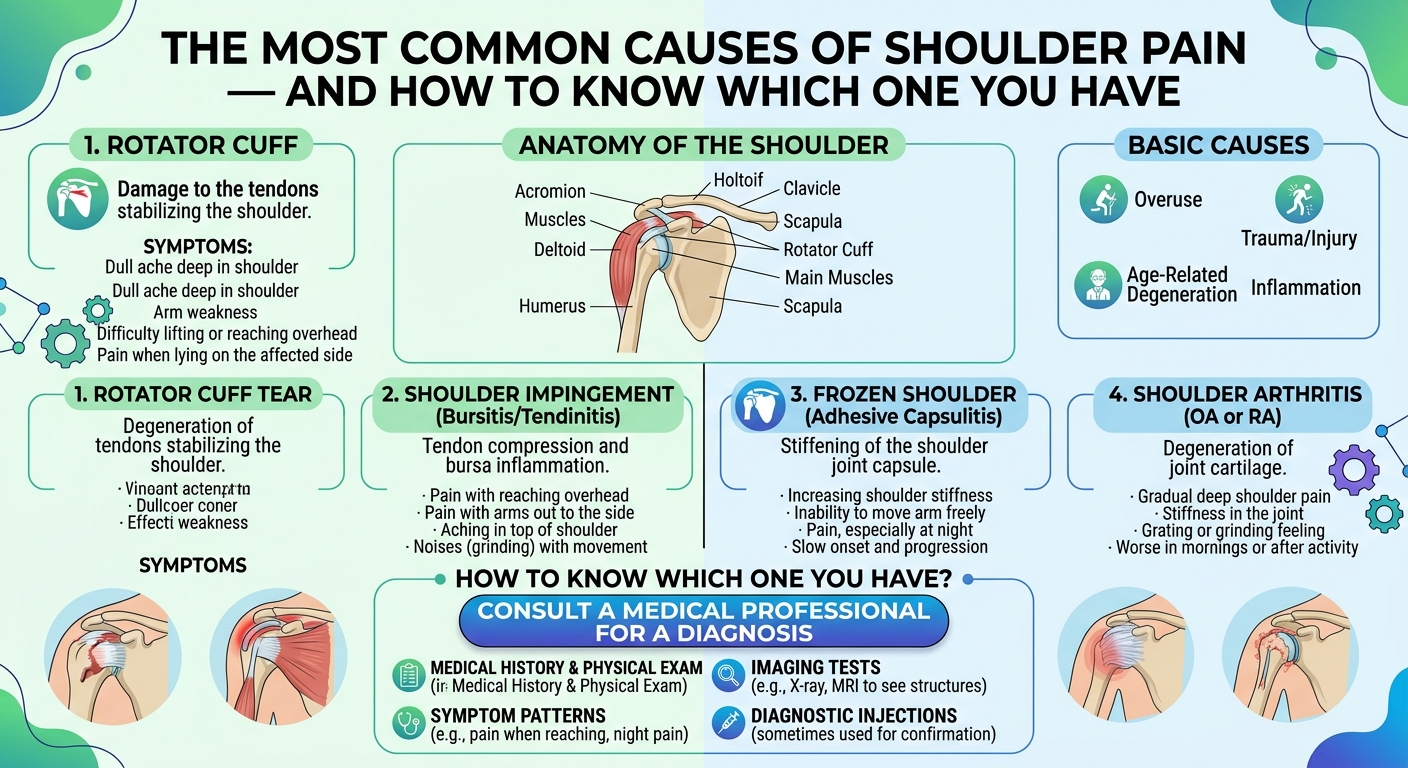
1. Rotator Cuff-Related Shoulder Pain
The rotator cuff is a group of four muscles and their tendons that help control shoulder movement and stabilise the shoulder joint.
These tendons can become painful or less tolerant of load, particularly when the demands placed on them exceed their current capacity.
Rotator cuff-related shoulder pain is a common cause of discomfort in people who lift weights, play overhead sports, perform repetitive work, or regularly reach above shoulder height.
Common symptoms
You may experience:
- Pain when lifting your arm to the side or overhead.
- Discomfort when reaching behind your back.
- Pain when lifting or carrying objects.
- Weakness or difficulty performing certain movements because of pain.
- Discomfort when lying on the affected shoulder.
- Pain during gym exercises such as shoulder presses, lateral raises, or overhead movements.
Symptoms may develop gradually or after a change in activity.
How can you recognise it?
A common pattern is pain during certain shoulder movements, particularly when the arm is elevated or loaded.
For example, you may be able to move your arm comfortably at waist height but experience pain when reaching to a high shelf or performing an overhead press.
However, these symptoms are not exclusive to rotator cuff problems. Other shoulder conditions can produce similar patterns, so an assessment is needed to narrow down the cause.
What can help?
Management may include adjusting aggravating activities, progressively strengthening the rotator cuff and surrounding muscles, and gradually rebuilding your tolerance for overhead movements.
Complete rest is not usually necessary. Instead, the goal is to find an appropriate level of activity and progressively increase your capacity.
2. Shoulder Bursitis and Subacromial Pain
A bursa is a small fluid-filled sac that helps reduce friction between tissues. In the shoulder, the subacromial bursa sits beneath part of the shoulder blade and helps tissues move smoothly during arm elevation.
The bursa can become irritated, but shoulder pain in this region often involves several structures, including the rotator cuff tendons.
For this reason, healthcare professionals may use the term subacromial pain rather than assuming that bursitis alone explains the symptoms.
Common symptoms
- Pain when reaching overhead.
- Discomfort when lifting the arm away from the body.
- Pain during repetitive activities, such as painting or placing items on high shelves.
- Discomfort when lying on the affected side.
How can you recognise it?
You may notice that your shoulder hurts during a particular range of arm elevation, especially when lifting or reaching repeatedly.
However, there is considerable overlap between subacromial pain and rotator cuff-related pain. Symptoms alone cannot reliably distinguish between them.
What can help?
Treatment may involve temporarily modifying painful activities, maintaining comfortable movement, and gradually rebuilding shoulder strength and tolerance.
Your physiotherapist can help determine which movements need adjustment and how to progress activity without unnecessarily avoiding shoulder use.
3. Frozen Shoulder (Adhesive Capsulitis)
Frozen shoulder occurs when the capsule surrounding the shoulder joint becomes painful and stiff. It often develops gradually and can significantly restrict everyday movement.
It is more common in adults between approximately 40 and 60 years of age and is associated with diabetes and certain other health conditions. It can also occur after a period of reduced shoulder movement.
Common symptoms
- Gradually increasing shoulder pain.
- Stiffness that makes it difficult to raise your arm.
- Difficulty reaching behind your back, such as when dressing.
- Trouble reaching overhead or placing your hand behind your head.
- Pain that interferes with sleep.
- Restricted movement even when someone else attempts to move your arm gently.
How can you recognise it?
One of the most important clues is significant restriction in both your active and passive shoulder movement.
Active movement is what you can do using your own muscles. Passive movement is what a clinician can achieve by gently moving your arm for you.
With frozen shoulder, both may be restricted, often including outward rotation of the arm.
This differs from some other shoulder conditions, where you may struggle to lift your arm yourself but retain more movement when the arm is assisted.
What can help?
Management depends on the stage of the condition, your level of pain, and the degree of stiffness.
Treatment may include pain management, appropriate mobility exercises, activity modification, and a gradual return to functional movement. For some people, medical options such as corticosteroid injections may also be considered.
Recovery can take many months and sometimes longer. Forcing the shoulder aggressively through severe pain is not necessarily helpful.
A tailored plan should respect your current symptoms while maintaining as much useful movement as possible.
4. Shoulder Impingement-Type Symptoms
The term shoulder impingement has traditionally been used to describe shoulder pain during arm elevation, often associated with structures around the rotator cuff and subacromial region.
However, shoulder pain is more complex than a single structure being mechanically trapped. Pain can involve tendon sensitivity, load tolerance, strength, and other individual factors.
Many clinicians therefore use terms such as rotator cuff-related shoulder pain or subacromial pain when these better describe the clinical presentation.
Common symptoms
- Pain when reaching overhead.
- Discomfort during lifting or throwing.
- Pain during particular ranges of arm elevation.
- Reduced tolerance for repetitive shoulder activity.
How can you recognise it?
You may notice that certain overhead movements are uncomfortable while movements closer to your body are easier.
However, this pattern overlaps with several shoulder conditions. It is not possible to confirm an impingement-related problem using symptoms alone.
What can help?
Depending on your presentation, treatment may include modifying aggravating activities, improving shoulder strength, and progressively restoring tolerance for overhead movements.
The aim is to improve your ability to perform the activities you need, rather than becoming fearful of a particular shoulder position.
5. Rotator Cuff Tear
A rotator cuff tear involves a partial or complete tear in one or more of the rotator cuff tendons.
Some tears develop gradually over time, while others occur following an injury, such as falling onto the arm or suddenly lifting a heavy object.
Not every tear causes pain or requires surgery. The importance of a tear depends on factors such as its size, the symptoms it produces, your strength and function, and your goals.
Common symptoms
- Pain when lifting the arm.
- Weakness during reaching or lifting.
- Difficulty performing overhead activities.
- Pain at night.
- A sudden loss of shoulder function after an injury in some cases.
How can you recognise it?
A significant injury followed by sudden weakness or an inability to raise your arm warrants prompt medical assessment.
However, weakness can also result from pain, and some people have rotator cuff tears without symptoms. A clinical examination helps determine whether further investigation is needed.
An ultrasound or MRI may be considered when the findings would help guide management.
What can help?
Depending on the tear and your circumstances, management may include physiotherapy, progressive strengthening, activity modification, and medical or orthopaedic review.
Some tears can be managed without surgery. Others, particularly certain acute traumatic tears with substantial weakness, may benefit from early specialist assessment.
The decision should be individualised rather than based on scan findings alone.
6. Shoulder Dislocation and Instability
A shoulder dislocation occurs when the ball of the upper arm moves completely out of the shoulder socket. Partial displacement is called a subluxation.
Dislocations commonly occur after a fall, collision, or sporting injury. Some people also experience recurrent instability after an initial dislocation.
Common symptoms
During an acute dislocation, symptoms may include:
- Severe pain.
- An obvious change in shoulder shape.
- Inability or extreme difficulty moving the arm.
- A feeling that the shoulder has slipped out of place.
- Numbness or tingling in the arm or hand.
With recurrent instability, symptoms may be less dramatic and include apprehension or a sensation that the shoulder might slip out during certain movements.
How can you recognise it?
An obvious deformity or sudden inability to move the shoulder following trauma should be treated as an emergency.
Do not attempt to force the shoulder back into place yourself. Seek urgent medical care.
After the dislocation has been managed, rehabilitation may be needed to restore movement, strength, coordination, and confidence.
What can help?
Treatment depends on the injury, associated damage, age, activity demands, and whether instability recurs.
Rehabilitation may focus on restoring shoulder control and strength before gradually returning to sport or other demanding activities. Some cases require orthopaedic review.
7. Shoulder Osteoarthritis
Osteoarthritis involves changes in the joint cartilage and surrounding structures. In the shoulder, it can affect the main shoulder joint or the acromioclavicular (AC) joint near the top of the shoulder.
It becomes more common with age and may also occur following previous injury.
Common symptoms
- Gradually increasing shoulder pain.
- Stiffness, particularly after inactivity.
- Reduced range of motion.
- Discomfort during everyday tasks.
- A grinding or clicking sensation in some cases.
How can you recognise it?
Shoulder osteoarthritis may cause persistent pain and stiffness, especially when the joint is moved towards the limits of its range.
However, clicking and stiffness are not specific to arthritis. An assessment is needed to understand the likely cause, and imaging may be considered when clinically appropriate.
What can help?
Management may include maintaining comfortable movement, strengthening surrounding muscles, adjusting activity, and managing symptoms.
Medical options may also be appropriate depending on the severity of the condition. Surgery is considered for selected people with substantial pain and disability who have not improved sufficiently with non-surgical management.
The presence of arthritis on an X-ray does not automatically mean that surgery is needed.
8. AC Joint Pain
The acromioclavicular joint connects the collarbone to the acromion, which is part of the shoulder blade.
Pain in this area may develop after a fall onto the shoulder, a direct impact, repetitive loading, or degenerative changes.
Common symptoms
- Pain located at the very top of the shoulder.
- Tenderness around the joint.
- Discomfort when reaching across your chest.
- Pain during heavy bench pressing or push-ups.
- Localised pain after a direct shoulder impact.
How can you recognise it?
Pain that is clearly located at the top of the shoulder and aggravated by bringing the arm across the body may suggest AC joint involvement.
However, other conditions can produce similar symptoms. Following a fall or collision, an examination may be needed to determine whether there is a joint sprain, fracture, or another injury.
What can help?
Treatment depends on the nature of the injury. It may include modifying painful activities, restoring comfortable movement, and progressively rebuilding shoulder strength.
More significant injuries may require medical assessment and, in some cases, specialist review.
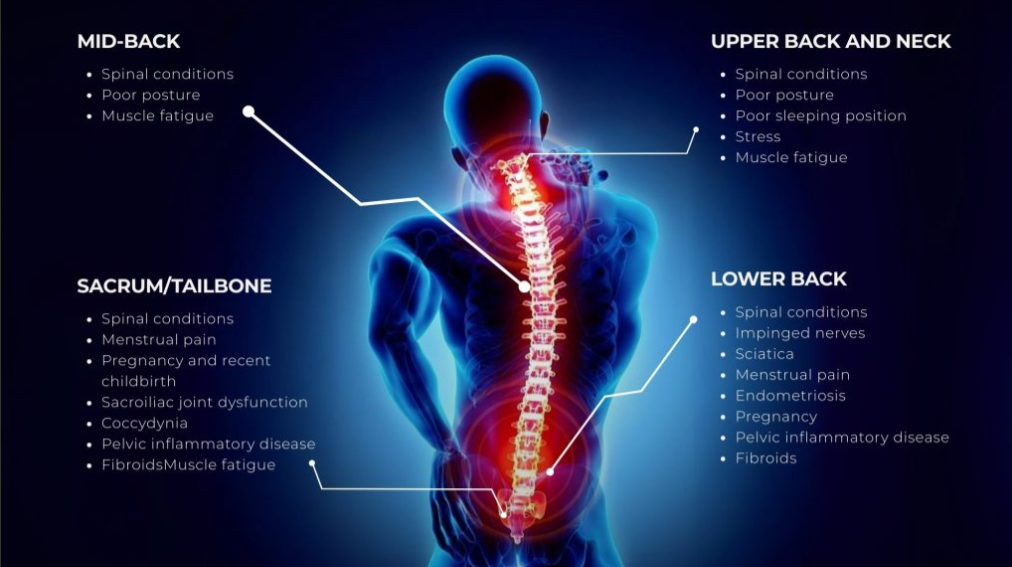
9. Shoulder Pain That Actually Comes From the Neck
Not all pain felt around the shoulder originates in the shoulder joint.
Problems involving the cervical spine, including irritation of a nerve in the neck, can cause pain around the shoulder blade or down the arm.
Common symptoms
- Pain around the shoulder blade or upper arm.
- Neck pain or stiffness.
- Tingling or numbness extending down the arm.
- Symptoms that change with neck position.
- Weakness affecting certain arm or hand movements.
Some people experience arm symptoms even when neck pain is mild or absent.
How can you recognise it?
Your clinician may assess both your neck and shoulder to determine which region is most likely contributing to your symptoms.
Changes in sensation, muscle strength, reflexes, and symptom behaviour can provide useful information.
What can help?
Management depends on the underlying cause. It may involve appropriate movement, exercise, activity modification, and medical assessment when neurological symptoms warrant further investigation.
New or progressive arm weakness, significant neurological changes, or symptoms following major trauma should be assessed promptly.
10. How to Tell Which Shoulder Condition You Might Have
The pattern of your symptoms can provide clues, but it cannot confirm a diagnosis on its own.
The following guide summarises some common patterns.
| Symptom pattern | Possible cause to consider |
|---|---|
| Pain when lifting the arm or performing overhead activity | Rotator cuff-related pain or subacromial pain |
| Marked stiffness with restricted active and passive movement | Frozen shoulder or joint arthritis |
| Sudden pain and weakness after a fall or lifting injury | Acute rotator cuff tear or another traumatic injury |
| Shoulder looks deformed after an injury | Possible dislocation or fracture; seek urgent care |
| Pain at the very top of the shoulder, especially after impact | AC joint injury or irritation |
| Shoulder blade pain with tingling or numbness down the arm | Possible neck-related nerve involvement |
| Gradually worsening stiffness and reduced function | Frozen shoulder, osteoarthritis, or another shoulder condition |
These are general patterns, not diagnostic rules. Several conditions can occur together, and symptoms alone cannot reliably identify the exact structure responsible.
The purpose of recognising patterns is to guide the next step, not to replace a proper assessment.
11. When Should You Seek Medical Attention for Shoulder Pain?
Most shoulder pain can be assessed routinely, but some symptoms require urgent care.
Seek emergency medical attention if:
- Shoulder pain occurs with chest pressure, shortness of breath, sweating, faintness, or pain spreading to the jaw or arm, as these may indicate a heart problem.
- Your shoulder looks deformed after an injury.
- You have severe pain after significant trauma.
- Your arm becomes cold, pale, or unusually discoloured after an injury.
- You develop sudden or significant weakness or loss of sensation following trauma.
Arrange prompt medical assessment if:
- You have persistent or unexplained shoulder pain that is worsening.
- You have fever, redness, warmth, or marked swelling around the joint.
- You cannot raise your arm after an injury.
- You have progressive numbness or weakness.
- You experience unexplained weight loss, a history of cancer, or other concerning symptoms alongside persistent pain.
Do not assume that severe or unusual symptoms are simply a muscle strain. Your safety comes first.
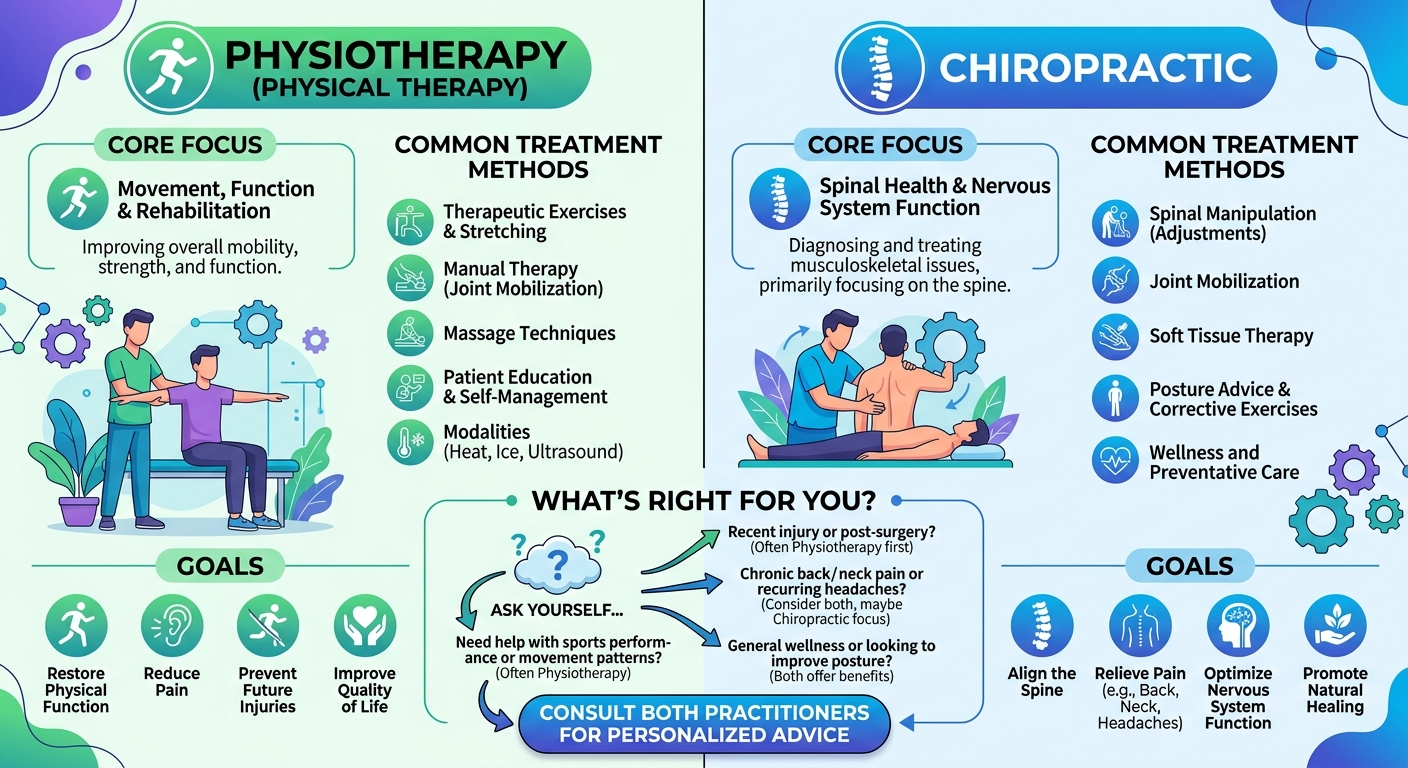
12. How Physiotherapy Can Help Shoulder Pain
Once serious conditions have been considered and the likely cause has been assessed, physiotherapy can help you work towards restoring comfortable movement and useful function.
At Narrow Gate Physiotherapy in Belmore, NSW, we take an individualised approach because two people with similar shoulder symptoms may have very different needs.
Step 1: Understand your symptoms
We explore when your pain began, what aggravates it, whether there was an injury, and how the symptoms affect your daily activities.
We also consider your work, exercise routine, previous injuries, medical history, and goals.
Step 2: Assess movement and strength
Depending on your presentation, the assessment may include shoulder range of motion, strength, functional movements, and relevant neck or neurological testing.
This helps establish a working diagnosis and determine whether further medical assessment or imaging may be needed.
Step 3: Adjust your activity and workload
You may not need to stop all exercise or work.
Instead, we help you identify which activities need temporary modification and how to maintain an appropriate level of movement while symptoms settle.
For example, you may temporarily reduce overhead lifting while continuing other exercises that your shoulder tolerates well.
Step 4: Build strength and capacity
Your rehabilitation may include exercises to improve shoulder strength, movement control, endurance, and tolerance for specific tasks.
The programme should progress according to your symptoms, ability, and goals.
Step 5: Return to the activities that matter
The goal is not simply to make your shoulder feel better on the treatment table.
It is to help you return to the activities that matter to you, whether that means lifting at the gym, performing your job, playing sport, or completing everyday tasks with greater confidence.
We also reassess your progress and adjust the plan when necessary.
13. Why Shoulder Rehabilitation Should Be Individualised
A common mistake is assuming that every shoulder problem needs the same exercises, stretches, or hands-on treatment.
For example, a person with frozen shoulder and a person with a painful rotator cuff may both struggle to reach overhead, but the reasons for their limitations can be different.
A person with a recent dislocation may need a very different progression from someone with gradual shoulder pain associated with repetitive lifting.
This is why an individualised approach matters.
Effective rehabilitation should consider:
- Your likely diagnosis and any relevant medical findings.
- Your current pain and movement limitations.
- Your strength and physical capacity.
- Your work and sporting demands.
- Your response to different activities.
- Your recovery goals and preferences.
At Narrow Gate Physiotherapy, we aim to help you understand your condition, participate actively in recovery, and build the capacity needed to maintain your progress.
Our philosophy is simple: Get you better. Keep you better. Help you stay better.
Frequently Asked Questions
Can shoulder pain go away on its own?
Some shoulder problems improve with time and appropriate activity modification. Others, including significant tears, dislocations, infections, or certain joint conditions, may need specific medical treatment. Persistent, worsening, or function-limiting symptoms deserve assessment.
Should I keep exercising if my shoulder hurts?
Not necessarily all exercises, but you may not need to stop everything. The appropriate approach depends on the cause and severity of your symptoms. Temporarily modify movements that significantly aggravate the shoulder and seek assessment if you are unsure what is safe.
Do I need an MRI for shoulder pain?
Not always. Many shoulder problems can initially be assessed through your medical history and physical examination. Ultrasound, X-rays, or MRI may be considered when the findings are likely to change management or when a more serious injury is suspected.
Is shoulder pain always caused by a shoulder injury?
No. Pain can sometimes originate from the neck or be referred from other areas of the body. Shoulder pain accompanied by chest symptoms or other concerning signs may require urgent medical assessment.
How long does shoulder pain take to improve?
Recovery depends on the underlying condition, symptom severity, your activity demands, and your response to treatment. Some problems improve over several weeks, while frozen shoulder, significant tendon injuries, and other conditions may take considerably longer.
Should I see a physiotherapist or a doctor first?
For uncomplicated shoulder pain, a physiotherapist may be an appropriate starting point. If the pain follows significant trauma, there is substantial weakness, the joint is deformed, or you have systemic or neurological warning signs, seek prompt medical assessment. Emergency symptoms should not wait for a routine appointment.
Conclusion: Understand Your Shoulder Before Treating It
Shoulder pain can come from several different conditions, including rotator cuff-related pain, frozen shoulder, tendon tears, joint problems, instability, and issues originating in the neck.
Although the symptoms may overlap, the right management plan depends on identifying the most likely cause, recognising warning signs, and understanding what your shoulder can currently tolerate.
Rather than guessing which exercise or treatment you need, start by understanding your symptoms and getting an appropriate assessment.
You can make a booking online or call us on 0478 260 200. For a limited time, we have free discovery sessions where you get assessed by our physiotherapists and given an outline of how we can help you to have full confidence in working with us. We also offer promotions that include discounted initial sessions to incentivise getting started with your rehabilitation journey.