Introduction
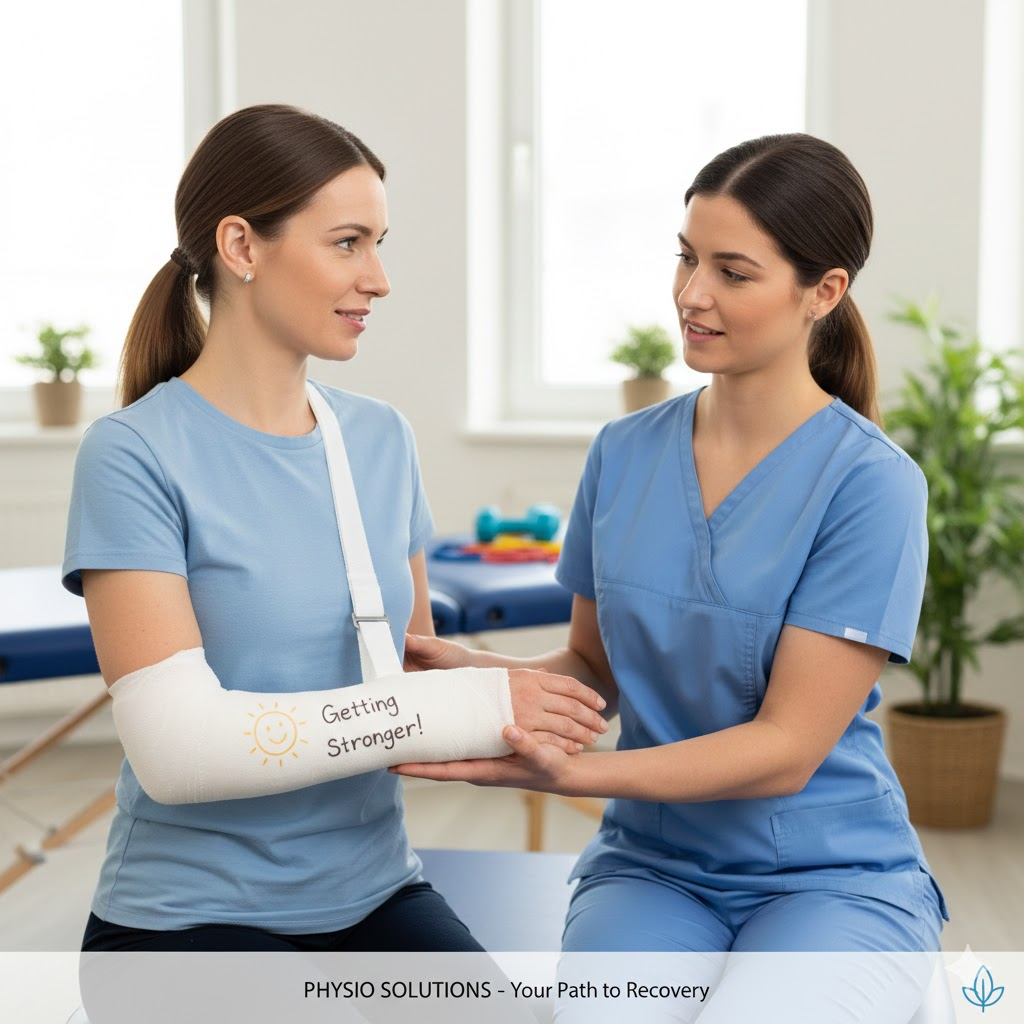
Recovering from a broken arm involves more than letting the bone heal. Once your doctor clears you for movement, guided physiotherapy helps restore mobility, strength, and function in the shoulder, elbow, wrist, and hand. This article provides safe, evidence‑based exercises with links to free videos and copyright‑free images to help you follow proper technique.
Note: Start these exercises only after medical clearance from your healthcare provider.
Why Physiotherapy Matters
After a fracture and immobilisation (cast or sling), muscles and joints can become stiff and weak. Physiotherapy:
- Improves range of motion
- Reduces stiffness
- Restores strength
- Prevents long‑term limitations
1. Shoulder Pendulum Exercise
How it Helps:
Gently mobilises the shoulder joint with minimal stress on healing tissues.
How to Do It:
- Lean forward slightly, supporting your non‑injured arm on a table.
- Let the injured arm hang down.
- Gently swing in small circles, clockwise and counterclockwise.
- Perform 10–15 circles each direction.
2. Elbow Flexion & Extension
How it Helps:
Restores bending and straightening motion after cast removal.
How to Do It:
- Sit or stand with your arm down at your side.
- Bend your elbow, bringing your hand toward your shoulder.
- Slowly lower back down.
- Do 10–15 repetitions, 2–3 sets.
3. Wrist Flexion & Extension
How it Helps:
Rebuilds wrist mobility and reduces stiffness.
How to Do It:
- Rest your forearm on a table with your hand hanging over the edge.
- Bend the wrist up (extension), then down (flexion).
- Repeat 10–15 times, 2–3 sets.
4. Forearm Rotation (Pronation & Supination)
How it Helps:
Restores ability to rotate your forearm — essential for activities like turning a key or opening jars.
How to Do It:
- Sit with your elbow by your side, bent to 90°.
- Rotate palm up (supination), then down (pronation).
- Do 10–15 reps, 2–3 sets.
5. Grip Strengthening
How it Helps:
Improves grip strength and hand control after immobilisation.
How to Do It:
- Use a soft ball or rolled towel.
- Gently squeeze and hold for 3–5 seconds.
- Repeat 10–15 squeezes, 2–3 sets.
Tips for Safe Rehabilitation
- Move slowly and within a pain‑free range.
- Avoid jerky or forceful movements.
- Perform exercises twice daily once cleared.
- Ice or rest if swelling increases (as advised by clinician).
Remember that a little discomfort can be normal as mobility improves, but sharp pain deserves attention.
When to See a Physiotherapist
Consult a physiotherapist if:
- Motion remains limited after several weeks
- Pain increases with continued exercise
- You notice weakness or numbness
- Daily tasks like dressing or eating remain difficult
A physiotherapist can tailor exercises to your specific injury and recovery stage.
Summary
Broken arm physiotherapy includes gentle mobility and strength exercises for the shoulder, elbow, wrist, and hand. Using the free images and video links above helps you learn proper technique and progress safely. With consistent practice and professional guidance, most people recover functional use of their injured arm.
You can make a booking online or call us on 0478 260 200. For a limited time, we have free discovery sessions where you get assessed by our physiotherapists and given an outline of how we can help you to have full confidence in working with us. We also offer promotions that include discounted initial sessions to incentivise getting started with your rehabilitation journey.
Want to give our physiotherapists a call before committing? Sign up for a free discovery consultation over the phone using this link.